

15 Best Free Open Source Ecommerce Platforms
When it comes to open source ecommerce platforms, there are plenty to choose from. Here, we take a close look at the 15 best available, which should help guide you in the right direction. I’m not going to lie- finding the perfect platform is not easy.
Each one has its own set of pros and cons and has been designed with a slightly different user in mind. Uploading products and customising your store can be very time consuming, so make sure you have given several platforms a try before you make that final decision and integrate one into your site.
1. Magento (free)

You’ve only got to look at Magento’s client list to realise what an excellent piece of open-source software it is. Samsung, The North Face, Stussy and Nespresso all use it to power their online stores. It’s used by 30,000 merchants and is the world’s fastest growing ecommerce platform. You have to pay for the Enterprise Edition, which is packed full of extremely useful features, but the Community Edition, meant for developers only, is free to download and use.
2. osCommerce (free)
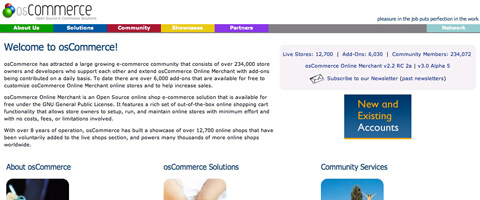
osCommerce is absolutely free under the GNU General Public License and caters very well to most people’s needs. Unsurprisingly, considering how easy it is to set up and run, it’s extremely popular, powering over 228,700 online stores. Such popularity does come with a significant downside however- it makes it harder for you to differentiate your store from the thousands of others out there. If you want to stand out from the crowd, you’re going to need to use some of the 5,800 add-ons available, some of which cost money.
3. OpenCart (free)
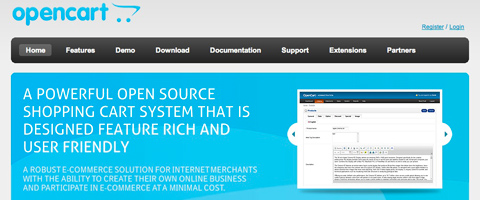
Not only does OpenCart look great, it’s extremely scalable. You can create an unlimited number of categories, sell an unlimited number of products, accept multiple currencies, use multiple languages, and choose from over 20 payment and 8 shipping methods. It’s user-friendly and search-engine-friendly too, so will help your prominence in Google. Customers can even review and rate the items you sell. It’s not as popular as osCommerce, so help and guidance is not so freely available, but it’s a darn sight better looking.
4. Spree Commerce (free)
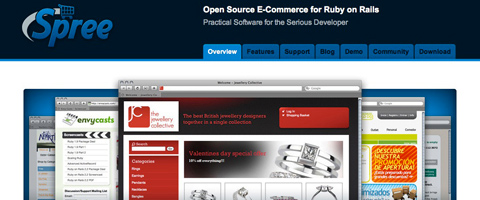
Spree is an open-source ecommerce platform for Ruby on Rails. Using Spree’s extension system, you’ll be able to customise your store and mark yourself out from your competitors. Useful features include support for over 50 payment gateways, single page checkout and custom tax logic, which can save merchants lots of time and effort. It also comes with Google Analytics built in.
5. PrestaShop (free)
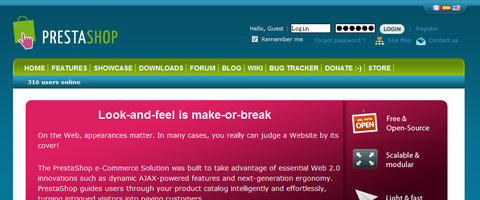
PrestaShop is another robust, professional-grade e-Commerce solution that you can download, install, and use for free. On the back end, you’ll use a full-featured back-office application to manage your online business (including inventory, orders, shipping, and customers) in real-time. Your customer’s payments are sent directly to your commerical bank account using the latest security technology.
6. VirtueMart (free)
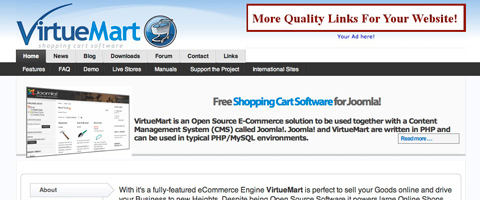
VirtueMart, which has been designed to work alongside Joomla!, is a really neat cart which customers feel instantly comfortable with. Not only does it let customers buy things, it lets them create an account, add addresses and access their order history. Multiple languages and currencies, and unlimited products and categories are supported. 2.5 million people have downloaded VirtueMart so far and the vast majority is happy with the results.
7. Ubercart (free)
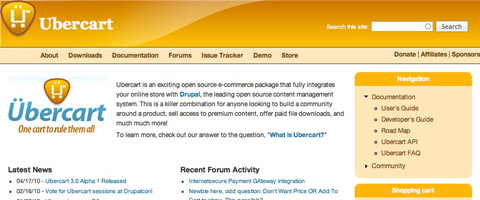
Ubercart is specifically designed for people selling things like file downloads, event registrations, website access passes and event tickets, rather than physical products. Like VirtueMart, which must be integrated with Joomla!, Ubercart must be integrated with Drupal. Drupal users will feel comfortable choosing the ideal modules and themes to customise their shop with, but if you’re not a Drupal user, I suggest choosing a platform that’s a little more straightforward.
8. Zeuscart (free)
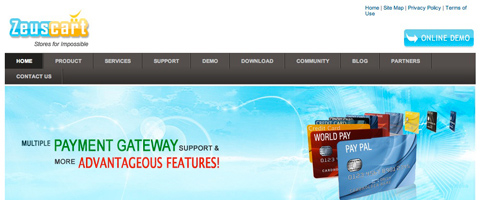
The best thing about Zeuscart is its user interface, which is rich, attractive, user-friendly and generally less boring than most of the open-source UIs that I have to look at on a daily basis. Designed with small and medium businesses in mind, users can make the most of SEO friendly URLs, gift cards, discounts, email templates and tier-pricing, which makes it possible to decrease prices for bulk orders.
9. Afcommerce (free)
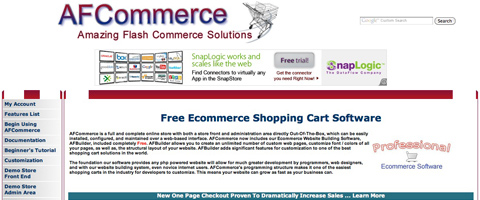
If you want to keep your ecommerce platform really, really simple, then Afcommerce could be the option for you. It’s not particularly good looking, neither on the customer nor the user side, but it works right out of the box and is ideal for beginners. It has a speedy one-page checkout, customer help pop-up windows and customer accounts are generated automatically from orders.
10. Zen Cart (free)

Easy to install, easy to customise and easy to manage, Zen Cart is perfect for those who want a straightforward ecommerce platform without the fuss. It comes with a newsletter manager, discount coupons, gift certificates and all the basic features you’d expect. Users can make the most of the numerous add-ons available to customise their store and make their admin experience a little easier. Too many add-ons, however, and the UI does get rather cluttered, which is a downside of the platform.
11. SimpleCart js (free)
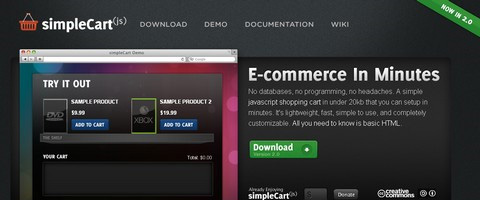
SimpleCart(js) 2.0 is no longer only for Paypal. It now works with Google Checkout as well. You can now add increment, decrement, and remove buttons to your cart. You can also rearrange items, change the HTML tags, do whatever you like to display your cart how you want. No databases, no programming, no headaches. A simple javascript shopping cart in under 20kb that you can setup in minutes. It’s lightweight, fast, simple to use, and completely customizable. All you need to know is basic HTML.
12. Tomato Cart (free)
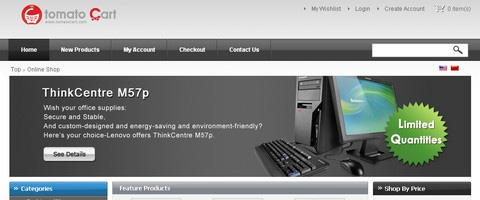
TomatoCart is the new generation of open source shopping cart solution. It is branched from osCommerce 3 as a separate project. As web applications become more and more sophisticated, modern web 2.0 technology such as Ajax and Rich Internet Applications offers significant usability improvements and makes interacting with the web interfaces faster and more efficient.
13. CubeCart (free)

CubeCart is great. It integrates really well into all kinds of sites and looks very professional from the customers’ point of view. CubeCart 3 is free and CubeCart 4, the premium platform, costs £110. There are a number of significant differences between the two: CubeCart 3 has 3 skins, CubeCart 4 has 5; CubeCart 3 has 4 payment steps, CubeCart 4 has 2; customer registration is mandatory in CubeCart 3, but optional in CubeCart 4 etc etc etc. I recommend investing in CubeCart 4 if you’re serious about using the platform for a long time, but suggest you give 3 a go first to see if you like the feel of it.
14. RokQuickCart (free)
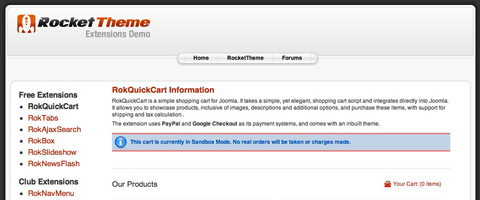
RokQuickCart is a very, very simple cart for Joomla!. Its simplicity, however, is both a help and a hindrance as although it can be set up in minutes, it lacks some features which you’ll find in other platforms in this list, for example, it only accepts payments through PayPal and Google Checkout. Having said that, it generally looks good and product image display is impressive.
15. StoreSprite (free)
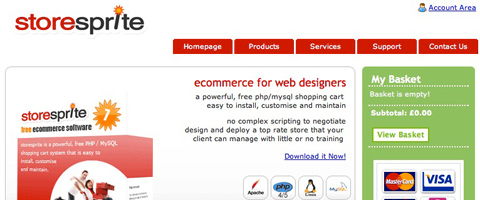
Despite being completely free, StoreSprite offers many features that you’d expect to find only on paid-for and more popular platforms. These include loyalty points, customer ratings and reviews, status notifications, order tracking, special offers, best sellers and shopper accounts. The main drawback of the platform is that your store will come with visible StoreSprite copyright notices, unless you pay to have them removed.
Premium Ecommerce Solution
If you are looking for a premium e-commerce solution I would recommend Shopify. Shopify is secure, easy to use, and best of all, offers fully customizable store designs. Over 20,000+ stores run on Shopify. Start your free, no-risk, 30 day trial now.
James Adams is a staff writer with Cartridge Save where he reviews products such as the HP 901. He also writes about design and marketing on their blog.